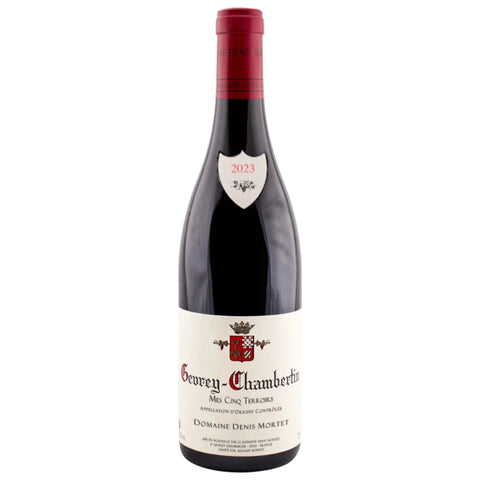
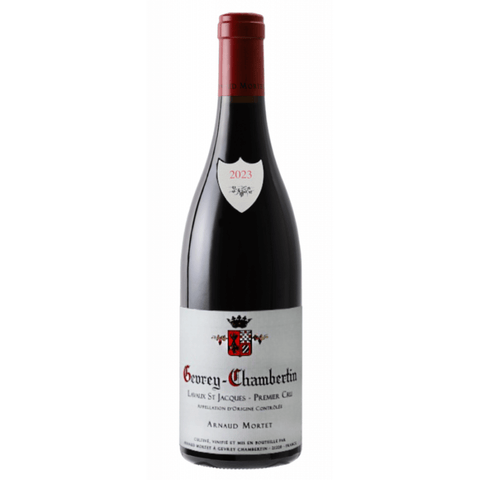
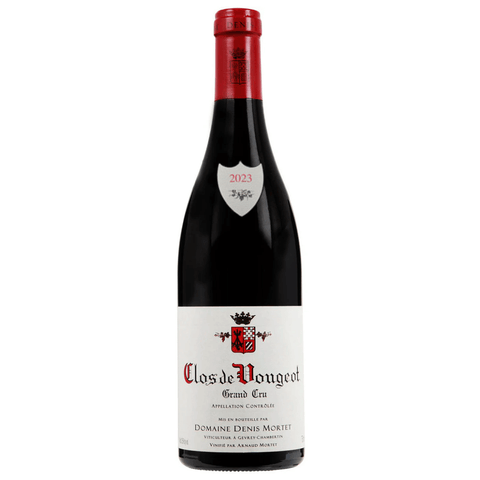
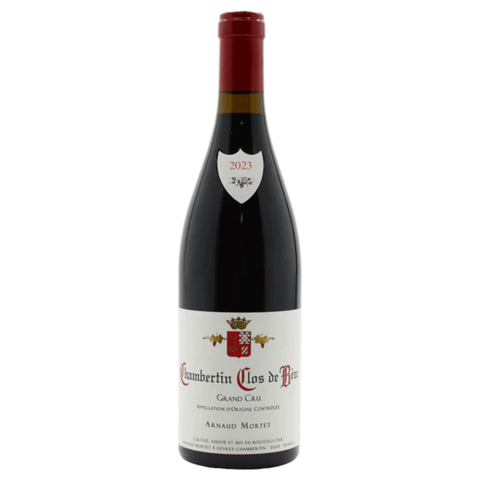
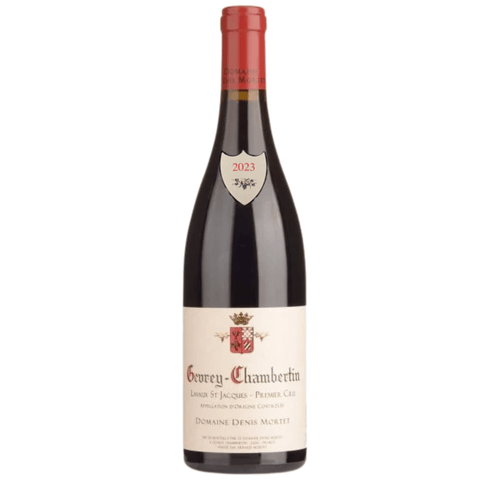
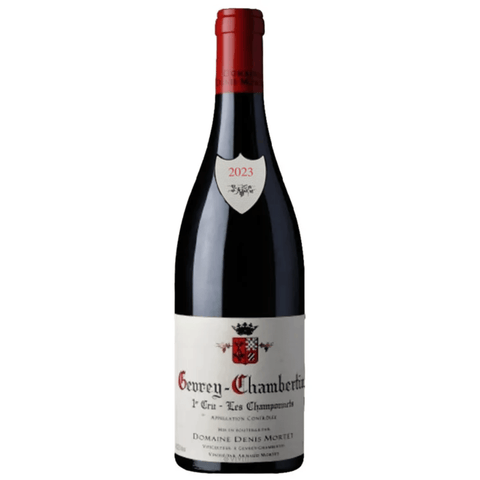
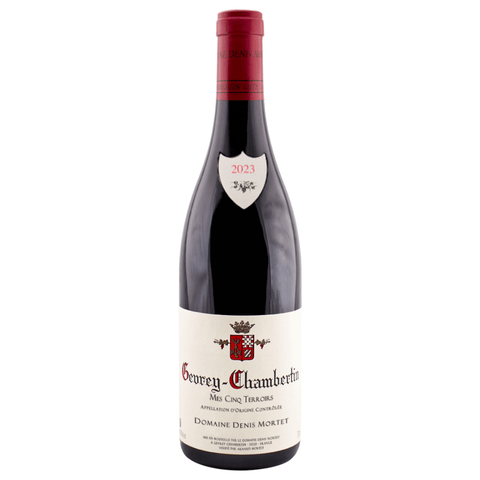
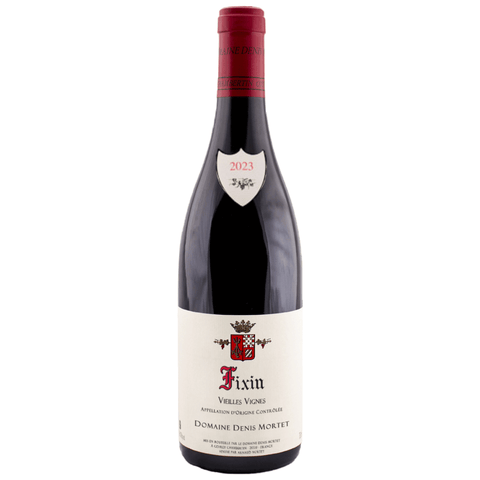
Precision Under Pressure: Denis & Arnaud Mortet and the 2023 Burgundy Vintage
There is a version of this story that begins with tragedy, and it is true. Denis Mortet, one of the most celebrated vignerons in Gevrey-Chambertin, died in January 2006. He was 51. His son Arnaud was 24.
What happened next is the more interesting part.
A Legacy Worth Understanding
Denis had built something remarkable in a short time. Starting with 4.5 hectares inherited from his father Charles in 1991, he grew the domaine to 11 hectares by the time of his death, including a plot of Chambertin Grand Cru that he and his wife Laurence had acquired in 1999. Other vignerons, impressed by his farming, would offer him their parcels on retirement, knowing they would be cared for properly. The domaine grew not through wealth but through reputation.
His style was shaped by two encounters that changed everything. In the mid-1980s he met Henri Jayer, and the two developed a lifelong friendship and mentorship. Then, just as he was preparing to launch his own label, he was invited to taste the entire 1991 lineup of Lalou Bize-Leroy with the legend herself. The wines he made from that point bore the imprint of both: concentrated, textured, alive with fruit, and built on obsessive vineyard work.
When Arnaud stepped into that role at 24, with his mother Laurence and later his sister Clémence alongside him, he did not simply maintain what Denis had created. He listened to it, and then he made it better.
What Arnaud Changed
Denis's wines were rich and opulent, very much in the Jayer tradition of lush, expressive Pinot Noir. Arnaud has moved the style toward something more precise and transparent. Less new oak. Gentler extraction. A lighter hand in the cellar, made possible by increasingly exceptional fruit in the vineyard.
The farming philosophy Denis established has been refined further under Arnaud. Chemical fertilisers and herbicides have been banned since 1996. All Premier and Grand Cru vineyards are ploughed by horse to avoid soil compaction. A cover crop of chickweed grows naturally between the rows. Treatments are applied at a fraction of the approved dose, calibrated to the actual level of disease pressure in each parcel. In Arnaud's own words: if disease threatens only 20% of the foliar surface, only 20% of the dose is used.
The soils, he says, have become extraordinary as a result. When you walk through the vineyards at harvest, the earth breaks apart underfoot. You sink into it.
The Technique That Defines the Wines
The most distinctive thing Arnaud has brought to the cellar is a variation on whole-bunch fermentation that he calls pédicelle.
Most serious Burgundy producers use some proportion of whole clusters in fermentation. The stems add structure and a herbal spice that, when the fruit is ripe enough, becomes something more like white pepper and forest floor. Arnaud goes further. He removes the central stem from each bunch, leaving tiny clusters of five or six grapes still attached to the smaller lateral stems. The result keeps the aromatic lift and textural freshness of whole-bunch fermentation while avoiding the greenness that a full stem can introduce.
It is painstaking work. But it explains something you notice immediately in these wines: a quality of silkiness that runs through every level of the range, from the Bourgogne Rouge to the Grand Crus. The technique lends a freshness that, as Neal Martin of Vinous observed in the 2023 Très Vieilles Vignes, you would simply not obtain otherwise.
The Arnaud Mortet Label
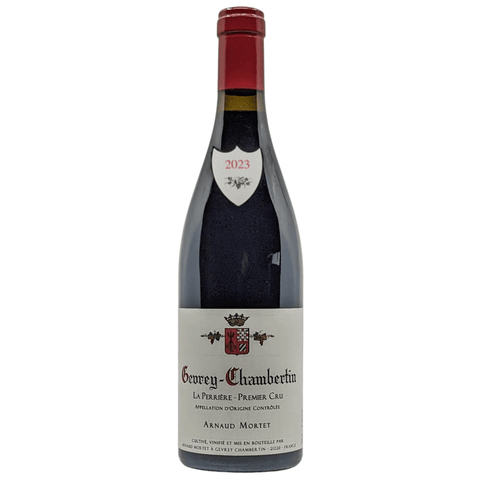
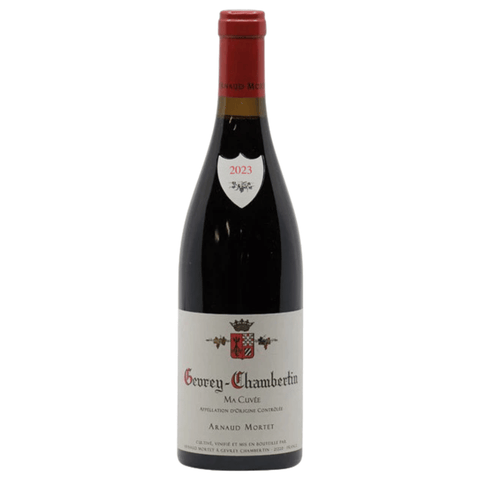
In 2016, a retiring vigneron entrusted his four-hectare estate in Gevrey-Chambertin to Arnaud and his sister Clémence. Technically, because they buy the fruit rather than owning the land outright, this is classified as a négociant operation. In practice it is nothing of the sort.
Arnaud and his team do all the vineyard work themselves, to the same standards they apply to the family domaine. The vineyards had received no herbicide for at least a decade before he took them on. The fruit is vinified in the same winery, by the same people, using the same approach. Jasper Morris MW, one of the world's foremost Burgundy authorities, has described it as effectively the same as a domaine.
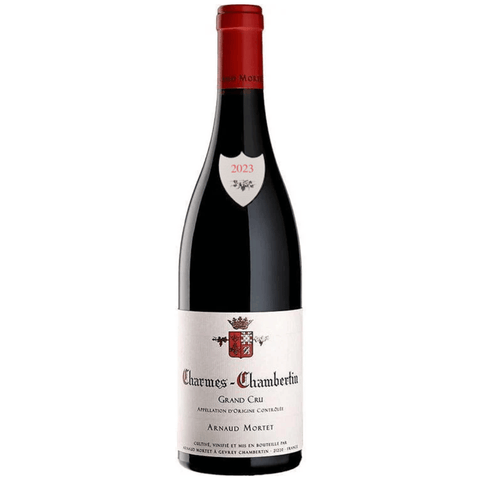
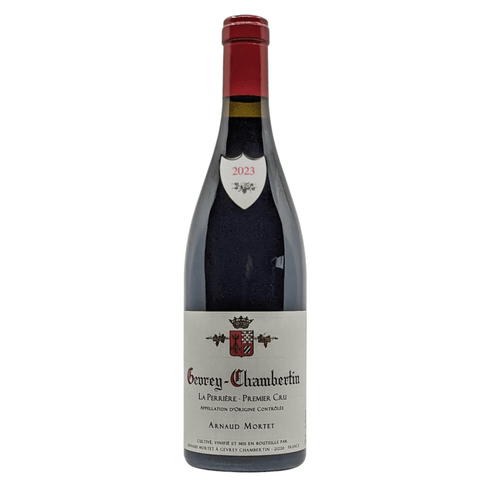
The parcels span village-level Gevrey-Chambertin through two Premier Crus and two Grand Crus: Mazoyères-Chambertin and Charmes-Chambertin. Old vines throughout. Nothing separates these wines from those under the Denis Mortet label beyond the administrative distinction of land ownership.
Why 2023 Matters
The 2023 vintage in Burgundy arrived after the celebrated 2022, and has suffered slightly from the comparison. It should not.
The growing season was warm and abundant. It demanded enormous work in the vineyard: Arnaud mobilised 60 harvesters instead of his usual 40, green-harvested to reduce yields, and still brought in 48 hectolitres per hectare. His own assessment was direct: in the end, it was the perfect level for good maturity and good quality.
What the vintage produced is wine of immediate appeal but genuine structure underneath. The fruit is ripe and generous. The aromatics are lifted and expressive. And threading through everything is the natural acidity that defines the Côte de Nuits in a good year, the kind that keeps the wines taut and focused rather than soft or short.
The critics who have assessed the 2023 Mortet wines most carefully have given them their highest marks at Grand Cru level, with the Chambertin and Mazis-Chambertin from the family domaine each receiving 97 points from the Tim Atkin report. Across the range, scores from Jasper Morris MW, Neal Martin at Vinous, William Kelley at The Wine Advocate and Tim Atkin MW converge in the low to mid-nineties, rising sharply through the Premier and Grand Crus.
The comparison with 2022 is also a practical one. That vintage's reputation has driven prices to levels that make broad collecting difficult. The 2023s offer comparable quality in the best cellars at more accessible prices, and with a drinking window that opens sooner while still rewarding patience.