Standish 2024: The Release That Hit 100
Schubert's Theorem hits 100 points, all four wines score 98 or higher, and a 2024 Barossa vintage built for the long haul. Here's why cellar members should be paying close attention.
For twenty-five years, Dan Standish has quietly built one of Australia's most respected single-vineyard Shiraz portfolios. He doesn't court critics. He doesn't market loudly. He produces four wines a year from four exceptional Barossa sites and lets them speak for themselves.
In 2024, all four of them spoke clearly.
The 2024 Schubert's Theorem has been awarded a perfect 100 points by Erin Larkin in Robert Parker's Wine Advocate. It joins a small but growing group of Standish wines to have earned that score from the publication, following the 2019 Relic and the 2022 Lamella and Relic. The Vinorium's Stuart McCloskey, a critic who famously refuses to attach numbers to his notes, broke his own rule for this one. It "truly deserves 100 points," he wrote, "every day of the week."
The other three wines? All 98 points from Larkin.
Three 98s and a 100 across the full range. It is the most consistent set of Standish scores we've ever shipped, and we want to make sure you know exactly why 2024 matters before allocations close.
Pedigree: Twenty-Five Years of Quiet Mastery
Dan Standish is a sixth-generation Barossan. His family settled in the valley in 1848, and he learned to prune vines at his grandfather's knee at the age of six. He studied chemical engineering at the University of Adelaide, did his first harvest at Wakefield in the Clare Valley in 1998, and a year later founded The Standish Wine Company while taking the winemaking job at Torbreck, where he would stay for seven vintages.
In between, he travelled. Sonoma. La Rioja. And most importantly, the northern Rhône.
The Rhône is the through-line of his philosophy. It is why The Relic includes a single row of Viognier co-fermented with the Shiraz, the same trick they pull at Côte-Rôtie. It is why his wines are wild-fermented in open-top vessels, foot-trodden, and basket-pressed. And it is why, in any given vintage, up to 80% of the original blend can be cut and sold off in bulk. Only the finest barrels are bottled under the Standish label. There is no second label. There is no declassified fruit.
This is Burgundian rigour applied to Barossa Shiraz. It is also why these wines have built the cult following they have, and why a release with these scores across all four wines is a deserved reflection of the level Dan has been working at for years.
Why 2024 Is the Vintage to Cellar
Barossa 2024 was a story of adversity and concentration.
A wet winter laid down deep soil moisture. Then the vines worked hard through a dry, frost-spotted spring. November flowering coincided with a heat spike that hurt fruit set on some sites. The summer was bone-dry, with not a drop of rain in February. And then, between 5 and 13 March, the valley copped a nine-day run of temperatures above 32°C that accelerated Shiraz harvest and dropped yields on the Barossa floor by as much as 20%.
That kind of vintage scares some producers. For Standish, it delivered exactly what his style needs: small berries, concentrated flavour, intensified colour, and a tannic spine built for the long haul.
And then the weather turned. The heat broke into a run of slowly warming days and cold nights, ideal conditions for Eden Valley's elevated, slower-ripening sites. That cool finish is the reason Lamella, off the 1858-planted Stonegarden vineyard, has the lift and minerality of one of the most aromatic Edens we've seen in years.
Low yields. Exceptional concentration. Structural tannin. Just enough cool to keep the wines fragrant rather than heavy. The combination of vintage and producer is why every wine in this release deserves a place in your cellar.
The Four Wines
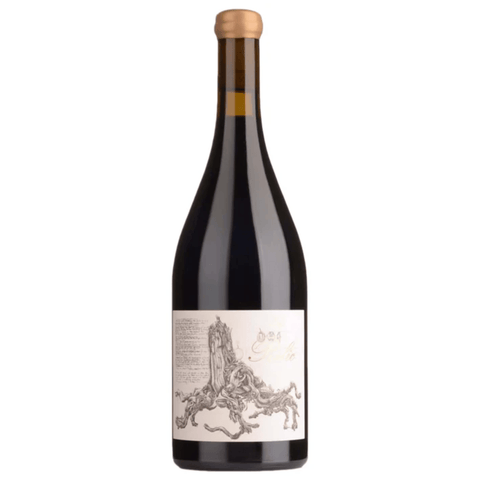
2024 Schubert's Theorem, 100 points
Helbig Family Vineyard, Roennfeldt Road, Marananga
The Schubert's Theorem comes from one of the most storied addresses in the Barossa. It is the only wine in the lineup matured partly in concrete egg, a deliberate choice to preserve aromatic detail, and the 2024 is unique within the range for being 100% destemmed. Which makes the concentration all the more remarkable.
Larkin describes a wine of blue fruits, Boscobel rose, pomegranate, licorice and seamless flow. She calls the concrete-egg element "the eye of a storm, a center of calm and clarity" in what would otherwise be a maelstrom of density. McCloskey is more direct: "one of the purest expressions of Australian Shiraz imaginable."
Cellar window: 2030 – 2055+. A benchmark Standish of the modern era.
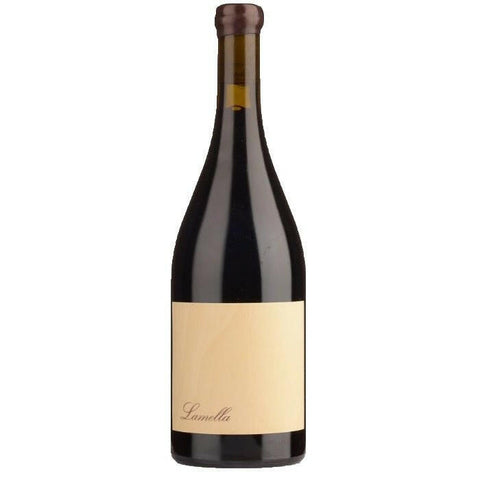
2024 Lamella, 98 points
Stonegarden Vineyard, Eden Valley (planted 1858)
The cool-climate counterpoint to the three Barossa Valley wines. The Shiraz vines at Stonegarden are among the oldest commercial plantings on the planet. Made, as always, with 100% whole bunches.
Larkin's line is the one to remember: a wine "you feel as much as you taste and smell." Gravel, graphite, ferrous tannins, dried rose petals, licorice, fennel and timut pepper. McCloskey calls this "the best Lamella I have sampled to date," a remarkable statement given the 2022 was itself a 100-pointer.
Cellar window: 2030 – 2060. The longest-lived wine in the release.
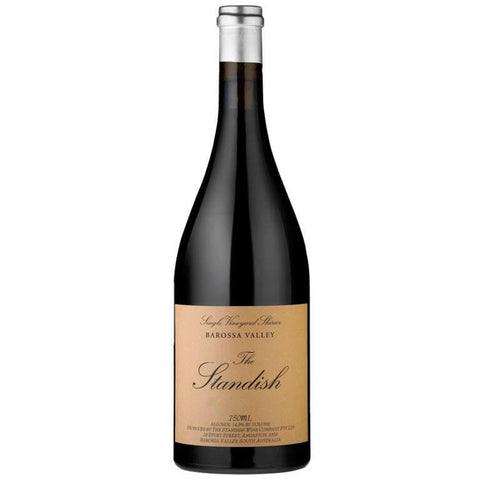
2024 The Standish, 98 points
Laycock Family Vineyard, Greenock
The namesake. The foundation stone. From a warm, iron-rich, classically powerful western Barossa site. Whole-bunch inclusion has jumped to 50% in 2024 (up from 30% the prior year), adding texture and complexity without diluting the site's distinctive shape.
Larkin calls this "ever the wine in the lineup that shows a clear sense of place." Sweet paprika, brick dust, rose petal, black cherry and licorice over a silky, structural palate. McCloskey's note describes a finish that runs "long, resonant and seemingly endless."
Cellar window: 2028 – 2055. Approachable young with a long decant, but built for the haul.
2024 The Relic, 98 points
Hongell Family Vineyard, Krondorf - 98% Shiraz, 2% Viognier co-fermented
The Rhône lover's Standish. An east-facing Krondorf site where a single row of Viognier (planted 1912) is co-fermented with the Shiraz, in the Côte-Rôtie tradition. About 25% whole bunches.
Larkin describes a perfumed wine led by red apples, cherry blossom, pomegranate and apricot flowers, set against black fruit, with ferrous, chalky tannins and a long, fine line. McCloskey's note opens with cracked black pepper and runs through iron ore, sea kelp, blackest liquorice and bergamot. The most aromatic wine in the range.
Cellar window: 2028 – 2052.
Why This Release, Why Now
This is exceptional critical reception across the entire range. A perfect score from Wine Advocate. Four wines at 98 or above. And a vintage with built-in concentration and structure that suits Dan's approach more naturally than the cooler, wetter 2023.
For those who have cellared Standish before, this is a vintage to deepen the vertical, especially alongside the 2022s.
For those who haven't, this is a strong place to start.